A note up front: this is not legal advice. It's a practical risk-reduction checklist based on patterns that consistently show up in published HOA case law. If your board is facing an actual legal issue, hire an attorney who specializes in community-association law in your state. The seven mistakes below are the ones that tend to show up before there's an attorney involved.
The pattern in most HOA lawsuits isn't a single dramatic event. It's a series of small communication failures that, individually, look harmless. They only become problems when somebody pulls them together as evidence. The good news: each of them is easy to avoid if you know what to watch for.
1. "Notice" that nobody can prove was received
Your governing documents require certain notices to be sent — assessment increases, rule changes, hearing notifications, lien warnings. The board's defense in disputes often hinges on proving the notice was actually delivered.
Boards that send notices via group email, with no read receipts, no delivery confirmations, and no record of when or to whom the email went, can find themselves in court with no way to prove proper notice was given. A resident saying "I never got it" and a board saying "we sent it" is, legally, a tie — and the burden of proof is on the board.
The fix: use a platform that logs delivery, read status, and per-resident timestamps for every official notice. At minimum, send official notices through a system that produces audit-grade records (date, time, recipient list, delivery confirmation). The same notice that's a "we definitely sent that" assertion in chat becomes ironclad evidence with a proper log behind it.
2. Inconsistent enforcement
The single most common claim in HOA lawsuits is selective enforcement: the resident argues that the rule the board cited them for is one the board ignores for other residents. If two houses have unapproved paint colors and only one gets a fine, the cited resident has a legitimate complaint.
The communication failure here is that the board can't show its work. Without a record of every warning letter, every fine, every response, the board can't demonstrate that enforcement was consistent — and the resident's "everyone else does it" argument lands.
The fix: log every enforcement action in a central place that the whole board can see. Every violation, every notice sent, every fine applied. When a question comes up later about consistency, you have data, not memories.
3. Retaliation evidence in writing
A board member, frustrated with a resident, sends an email or text saying something they shouldn't — "we'll see how much they like the rules when we start enforcing them" or "let's make sure their request gets denied." Or it shows up in board meeting minutes: a member's name being singled out, an explicit linkage between their complaint and a subsequent action against them.
This is gold for a plaintiff's attorney. Retaliation claims under federal Fair Housing law are difficult for HOAs to defend, and statements like these — even casual venting between board members — can be the smoking gun.
The fix: two parts. First, train the board (and remind them annually) that anything they write about any specific resident — email, text, message, meeting minutes — should be writeable assuming it might be read aloud in court. Second, use communication channels where retention is intentional rather than accidental. Personal email and text threads are bad places for board business because they create chaotic, hard-to-control evidence trails.
4. Discrimination patterns visible in the data
This one is subtle. The board enforces rules consistently in each individual case, but when you aggregate the enforcement actions, a pattern emerges that suggests bias: enforcement against one race, family configuration, or national origin at rates higher than the underlying population.
Even unintentional patterns are actionable under disparate-impact theory. And boards that don't track their enforcement actions in any centralized way often have no idea the pattern exists until a plaintiff's expert pulls together their enforcement history.
The fix: the same centralized enforcement log that helps with consistency also lets you audit yourselves. Once a year, look at the aggregate pattern. If something looks off, fix it before someone else finds it.
5. Selective transparency
State HOA laws generally require boards to provide members access to certain records — minutes, financial reports, contracts, voting records. Boards that gatekeep these documents create legal exposure. Members have to ask, requests get denied or ignored, eventually a lawsuit produces them via discovery instead.
Worse, selective transparency suggests something to hide. If the board is forthcoming about budget details but vague about a specific vendor contract, attorneys (and journalists) notice.
The fix: make every record that members are legally entitled to access available by default, in a central place, without requiring a formal request. If members can pull the minutes themselves any time, you avoid the "the board is hiding something" framing entirely.
6. The board chat where business actually happens
Many HOA boards run their actual decision-making in a private group text or Facebook Messenger thread, with the formal board meeting becoming a vote-ratification ceremony for decisions already made.
This violates open-meeting requirements in most states. And the thread itself is discoverable in litigation — every off-the-cuff opinion, side comment, and personal grievance becomes evidence.
The fix: board business stays in the board's official channel, with minutes properly recorded. Private chat is for "what time are we meeting Tuesday," not "I think we should deny the Henderson request because Marcus is annoying."
7. The angry resident the board ignores
Most HOA litigation is launched by residents who, in the months leading up to filing, sent the board increasingly frustrated communications that went unanswered. By the time the resident retains an attorney, they have a documented history of trying to resolve the issue and being stonewalled.
This isn't just bad practice — it's a litigation asset for the plaintiff. "Look, your honor, here are seven emails and three letters my client sent over six months. The board never responded."
The fix: have a process for resident communications that guarantees a response, even if the response is "we received your message and the board will discuss it at our next meeting." Set a service-level expectation (e.g., acknowledge within 5 business days) and stick to it. When a complaint goes unresolved, log the resolution attempts. The contrast between "we tried to work with them" and "we ignored them" is the difference between a defended case and a settled one.
The defense in most HOA lawsuits isn't "we did everything right." It's "we have records that prove we tried." The board that can produce a coherent paper trail wins; the board that can't, doesn't.
The common thread
Six of these seven mistakes share a single root cause: communication that lives in personal email, personal chat threads, and personal memory rather than in a system the board owns and can audit.
The fix isn't more communication — boards already communicate plenty. It's putting board communication in a place where it's logged, searchable, attributable, and accessible to the next board member who takes over.
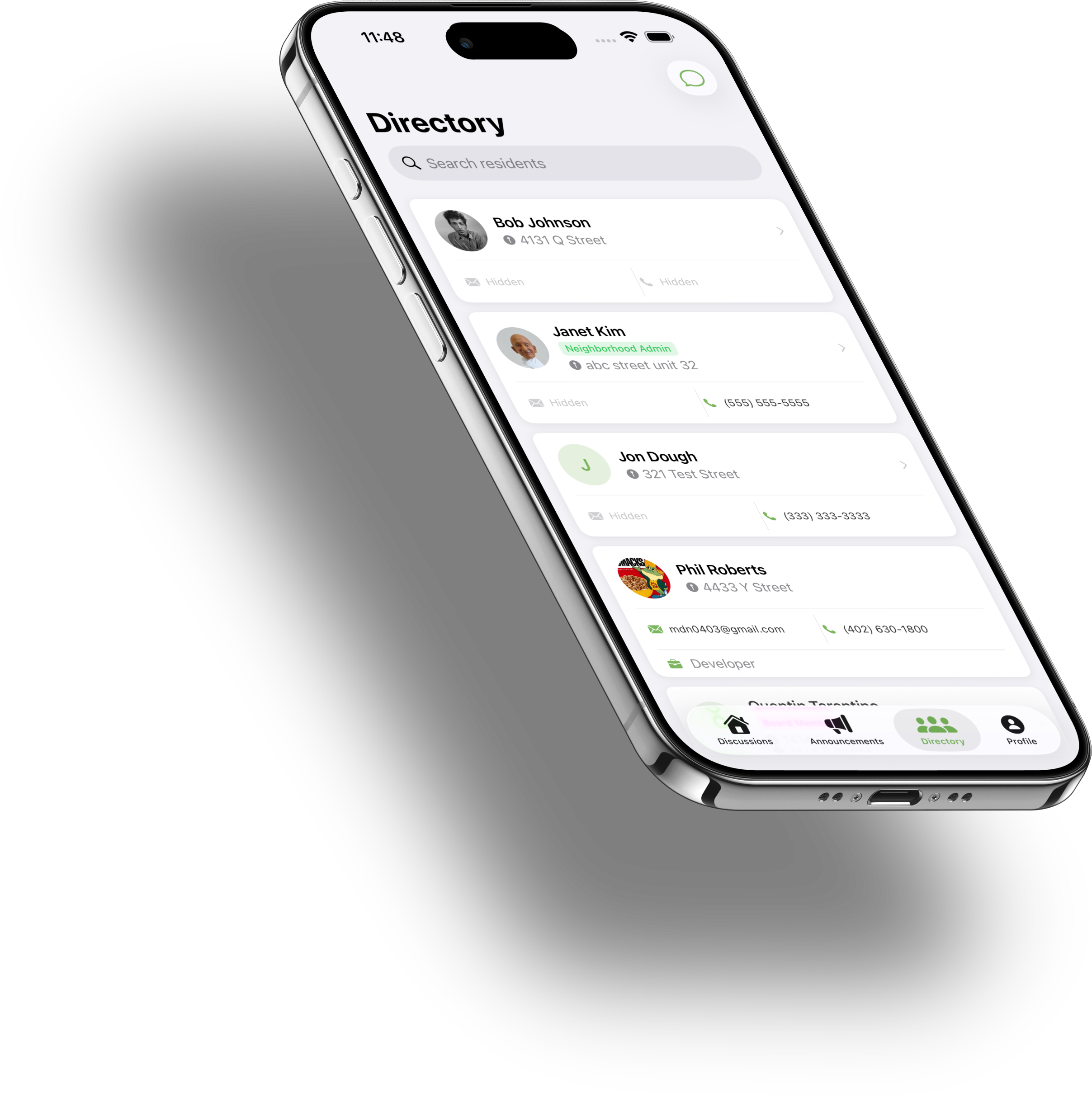
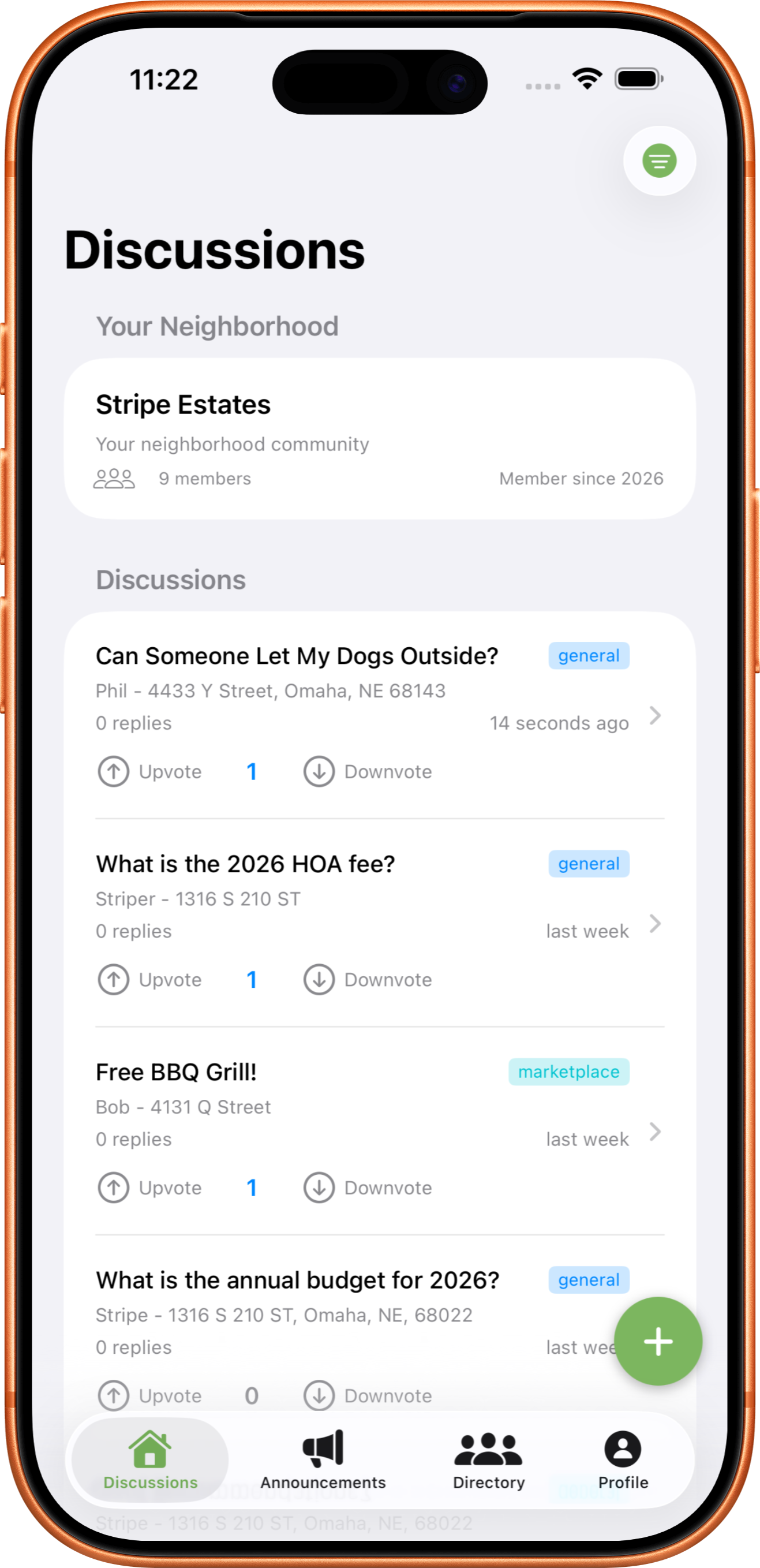
This is one of the reasons we built NeighborTopia. The communication tools aren't just convenience features — they're the substrate for a board that can defend its decisions later. Every announcement logs who sent it, who received it, when. Every poll captures who voted. Every enforcement action lives in a shared admin panel rather than in a treasurer's inbox.
None of this guarantees you won't get sued. It does mean that when something does come up, you have the receipts.
Try NeighborTopia free for 30 days
We'll onboard every household at no cost. Cancel anytime in the first 30 days — you won't be charged.
Start free trial See all features